He learned he was a rich man one February morning.
He did not live to spend a penny of it.
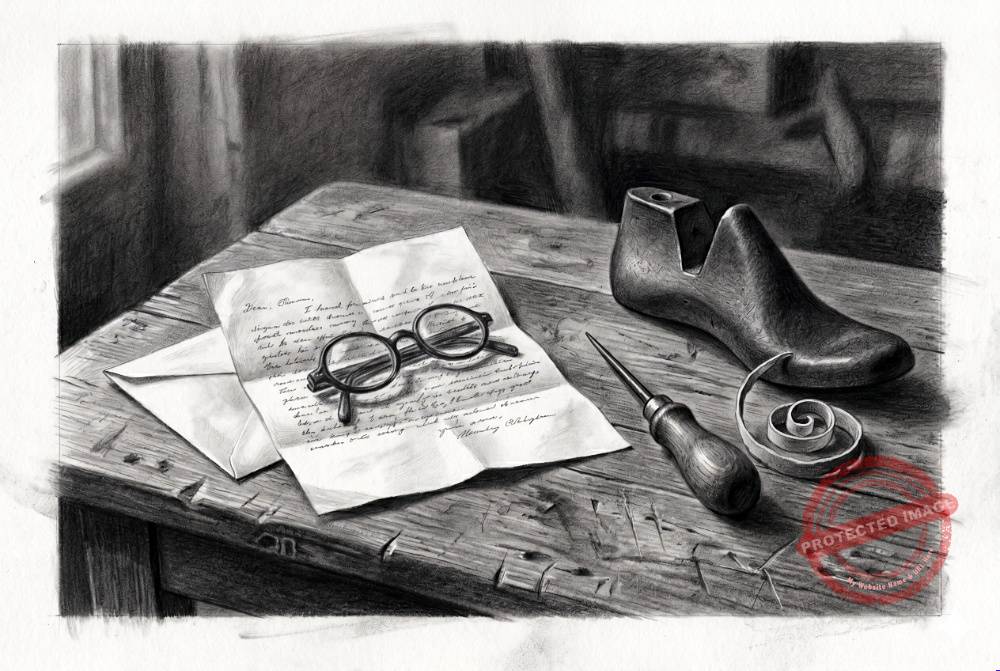
Glenarm sits where the glen comes down to meet the sea, and there are few prettier places on the whole Antrim coast. In the February of 1932 there lived just outside the village, in the townland of Mune, an old man by the name of Alexander McGavock. Old Alick, the place called him. He was seventy-four, long a widower, and he kept himself by mending his neighbours’ shoes — a cobbler of the old sort, the kind every parish once had and few now trouble to remember.
He had little enough. A pension, a cottage, the work that came to the door. It was a small life, quietly lived, and there is no shame in that. Most lives are.

Mouth of Glenarm River
The Letter from Colorado
On the morning of the 24th of February, a letter reached him from America. It had travelled a long road — from a firm of solicitors in Denver, away out in the State of Colorado — and it carried two pieces of news in the one envelope. His only brother, William, was dead. And William had left him the whole of what he owned.
The estate came to twenty-five thousand dollars. Five thousand pounds, in the money of home. To a man who mended shoes for his bread, it was a fortune past all imagining.
He did not have the imagining of it for long.
That same morning a coal vendor named McAvoy drew his cart up at the cottage and asked would the old man be needing any coal. Alick said he’d take a hundredweight, and McAvoy went out to the cart to fetch it. When he carried it back in, the old man was dead in his chair, and the letter from America was lying on the floor at his feet.
The doctor was sent for and came, but there was nothing in the bag for this. The heart had stopped, and stopped at once. He was a rich man in the post and a poor one in the chair, and the whole of the distance between the two was the length of a coal delivery.
William McGavock’s Forty Years in America
William McGavock had been the younger brother. He had gone out to America as a young man and stayed the best part of forty years, most of them in Denver, working on the railway. He never married. And only the year before, in 1931, he had come home to Glenarm on a visit, and bided a while in the old place, and gone back over the water. Neither of them, you’d think, could have known it was the last of their partings.
Heirs Wanted
Then comes the curious part of it. McGavock was a common enough name about Glenarm, and yet once the two brothers were gone, not a near relative could be found to either. Alick’s wife was long dead and the marriage had left no children; William had left none. The money sat somewhere on the far side of the Atlantic with nobody plain to claim it, and the district fell to wondering aloud where it would come to rest.
In the April, the Belfast News-Letter carried the notice that such matters carried:
McGAVOCK, Alexander, William, brothers, born Glenarm, Antrim, 1855–1860. Alexander was shoemaker Glenarm. Heirs entitled £5,000. Apply JOHN J. DWYER, 40, Wall Street, New York.
— Belfast News-Letter, Friday 29 April 1932
Thirty-Nine Pounds
And here the record does a quiet, awkward thing — the sort of thing it does far oftener than the tidy histories let on. For when Alexander McGavock’s own estate came to be settled, with administration granted at Belfast in the May of 1933, his effects were valued at thirty-nine pounds, nought shillings and ninepence. Not five thousand. Thirty-nine pounds and a little silver.
So where did the fortune go? Did it ever cross the water at all? Did some far-out cousin surface at the last and carry it off, or did it snag in the law and quietly come to nothing, the way money will when there’s no one left who ought to have it? I cannot tell you. The five thousand pounds is in the newspaper and the thirty-nine pounds is in the probate book, and the two of them have never once been introduced. I’ll not pretend to marry them up for you. I’d sooner leave the two figures sitting there in plain view, and let you make of them what you will.
It was called at the time a grim jest of fate, and I’ve not landed on a better phrase for it. A poor man is made rich by the morning post and dies of the reading of it; the riches then melt off to nothing, as though they had only ever been the bait in the joke. The Lord gave, says the old book, and the Lord hath taken away — though seldom both before the one morning was out.
What was left at the end was a cottage near Glenarm, thirty-nine pounds and some pennies, and an old cobbler who had mended his neighbours’ shoes for as long as any of them could mind, and who was — for the length of one February morning — the wealthiest man in the parish, and never knew the spending of a shilling of it.
He deserves to be remembered for more than the manner of his leaving. But it was the leaving the papers kept, and so it is the leaving that has brought him back to us. We take our people back whatever way they come.
McGavock Alexander of Mune Glenarm county Antrim shoemaker died 24 Feb 1932 administration (limited) Belfast 10 May 1933 to James Moore Pollin (solicitor) Effects £39 0s 9d. – looks like this was only his own money and not any of the £5000
Yvonne, many thanks for the post!
I wonder who ended up getting the five thousand pounds.
Or indeed, if the money ever made it’s way across the Atlantic.